

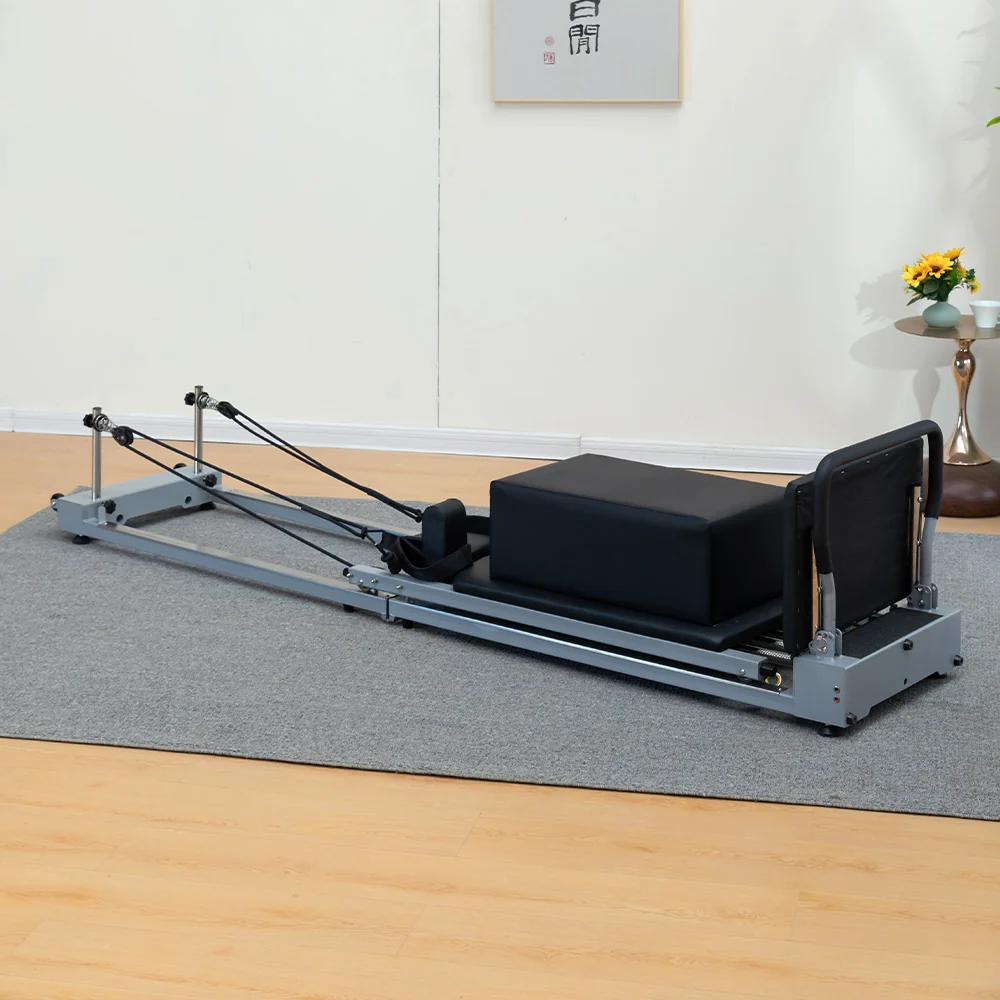
This guide breaks down what Pilates machine space at home really looks like in an Australian setting, so they can measure once and buy with confidence.
What counts as a “Pilates machine” in a home setup?
Most people mean a Pilates machine, usually a Pilates reformer, but some are referring to a foldable reformer, a Pilates chair, or a wall unit. Space needs vary a lot between these, even if the workouts look similar.
For this article, the focus is mainly on reformers because that is where Pilates machine space at home is most often misunderstood.
How much floor space does a full-size reformer need?
A standard home reformer typically needs around 2.5 m (length) by 1 m (width) as the footprint. That is the machine itself, not the room space they need to use it safely.
For realistic Pilates machine space at home, they should plan for the footprint plus clearance at the front, back, and at least one side for getting on and off.
How much clearance is needed around the machine to use it comfortably?
A practical rule is to add about 50–60 cm around key access points, plus more at the carriage travel ends if the room is tight. Many people find a total working area of roughly 3 m by 1.5–2 m feels comfortable.
If they want stress-free setup and movement, Pilates machine space at home should include space to kneel, stand, and adjust springs without bumping walls or furniture.
Does ceiling height matter for a Pilates machine at home?
Ceiling height usually is not an issue for a reformer alone, but it matters if they add a tower, half trapeze, or any vertical attachments. In many Australian homes, 2.4 m ceilings are common and usually fine, but they should check the product specs.
For Pilates machine space at home, ceiling height becomes important when they plan overhead arm work, standing series, or tower exercises.
What room size is “enough” for most people?
A small spare room can work if it fits the footprint and the person can move freely around at least one side. Many people succeed with a room around 3 m by 2 m, provided the layout is simple and doors do not swing into the working zone.
The best way to confirm Pilates machine space at home is to tape the outline on the floor and walk around it like they are doing a session.
Can they fit a Pilates machine in a living room or apartment?
Yes, if the layout is open and they can keep the access areas clear. In Australian apartments, the biggest constraint is often narrow walkways, sliding doors, or furniture that blocks the carriage ends.
To make Pilates machine space at home work in a living area, they may need to commit to leaving a dedicated “reformer zone” instead of shifting it every session.
How much space does a foldable reformer really save?
A foldable reformer saves storage space, not always workout space. When it is in use, it often needs similar clearance to a standard reformer, because the carriage still travels and the user still needs safe access.
Foldables can improve Pilates machine space at home when they can store the unit upright or under a bed between sessions, especially in smaller Australian homes.
Where do doors, windows, and wardrobes cause problems?
The biggest issues are doors that swing into the reformer area, wardrobe doors that cannot open, and windows that limit where the head end can go. Power points can also matter if they use a phone stand, small fan, or any connected accessories.
For reliable Pilates machine space at home, they should measure with doors open, not closed, and consider daily movement through the room.
What is the best orientation: along a wall or centred in the room?
Many people place the reformer parallel to a wall to save space and keep one side as the main access path. Centring the machine can feel premium, but it demands more clearance all around.
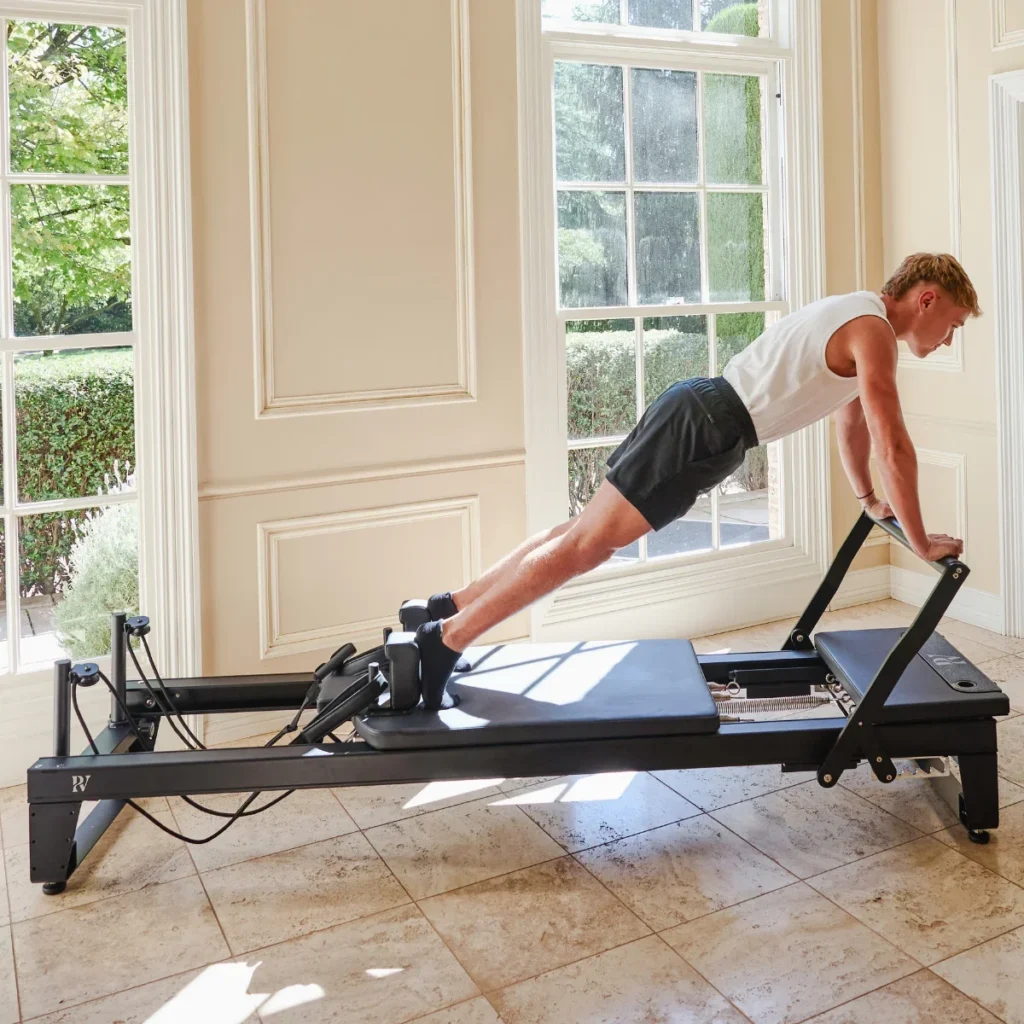
For most setups, home reformer Pilates equipment works best with one long side open and the ends kept clear for carriage travel and footbar changes.
How much space is needed if they want two people to use it?
Two-person use usually means one person training while another coaches, spots, or shares the room. That extra body needs standing space, often at the side, plus room to move around the ends.
If they expect shared sessions, Pilates machine space at home should include an extra 60–90 cm lane beside the main access side.
What about storage for accessories, not just the machine?
Accessories add up fast: box, jumpboard, pole, rings, straps, mats, and small weights. Without storage, the area feels cluttered, which makes the space feel smaller than it is.
A tidy accessory plan is part of Pilates machine space at home, whether that is a slim shelf, under-bed tubs, or a bench that doubles as storage.
Can they put a Pilates machine on carpet, tiles, or timber floors?
Most reformers can sit on carpet, tiles, or timber, but floor protection matters for noise and marks. On hard floors, a mat can reduce movement and protect boards. In apartments, vibration and sound can carry to neighbours.
If they are planning Pilates machine space at home in a unit, they should think about a dense rubber mat and the building’s by-laws around noise and flooring.
How should they measure correctly before buying?
They should measure the room length and width, then subtract any unusable areas such as door swings, built-ins, and tight corridors. Next, they should compare this against the reformer’s exact dimensions, not a “typical” estimate.
For accurate Pilates machine space at home, they should tape the footprint plus clearance, then simulate key moves like stepping on, lying down, and standing beside it.
What common mistakes make the space feel too tight?
The most common mistake is measuring only the machine footprint and forgetting how they will get on and off safely. Another is buying a longer model than expected, then discovering it blocks a wardrobe or door.
When Pilates machine space at home is planned properly, the reformer should not feel like an obstacle course or a permanent trip hazard.
Is it realistic to move the machine in and out each session?
Some people do move a foldable reformer, but it gets old quickly, especially if they are training several times per week. Full-size reformers can be heavy and awkward in narrow Australian hallways.
If they want consistency, Pilates machine space at home is best when the machine can stay in place and the area can remain set up.
What is a simple “space checklist” they can use today?
They can confirm space suitability with a quick checklist:
- Can they fit the reformer footprint with at least one clear access side?
- Can doors and cupboards open fully?
- Can they stand at the ends without hitting a wall?
- Is there a storage spot for accessories?
- Is flooring protected and noise considered?
If those answers are yes, Pilates machine space at home is usually workable even in modest Australian rooms.
What is the practical bottom line on how much space they need?
Most people will be comfortable with about 3 m by 2 m of usable space for a reformer setup, though some can make less work with careful layout. What matters is clearance, flow, and whether the setup can stay consistent.
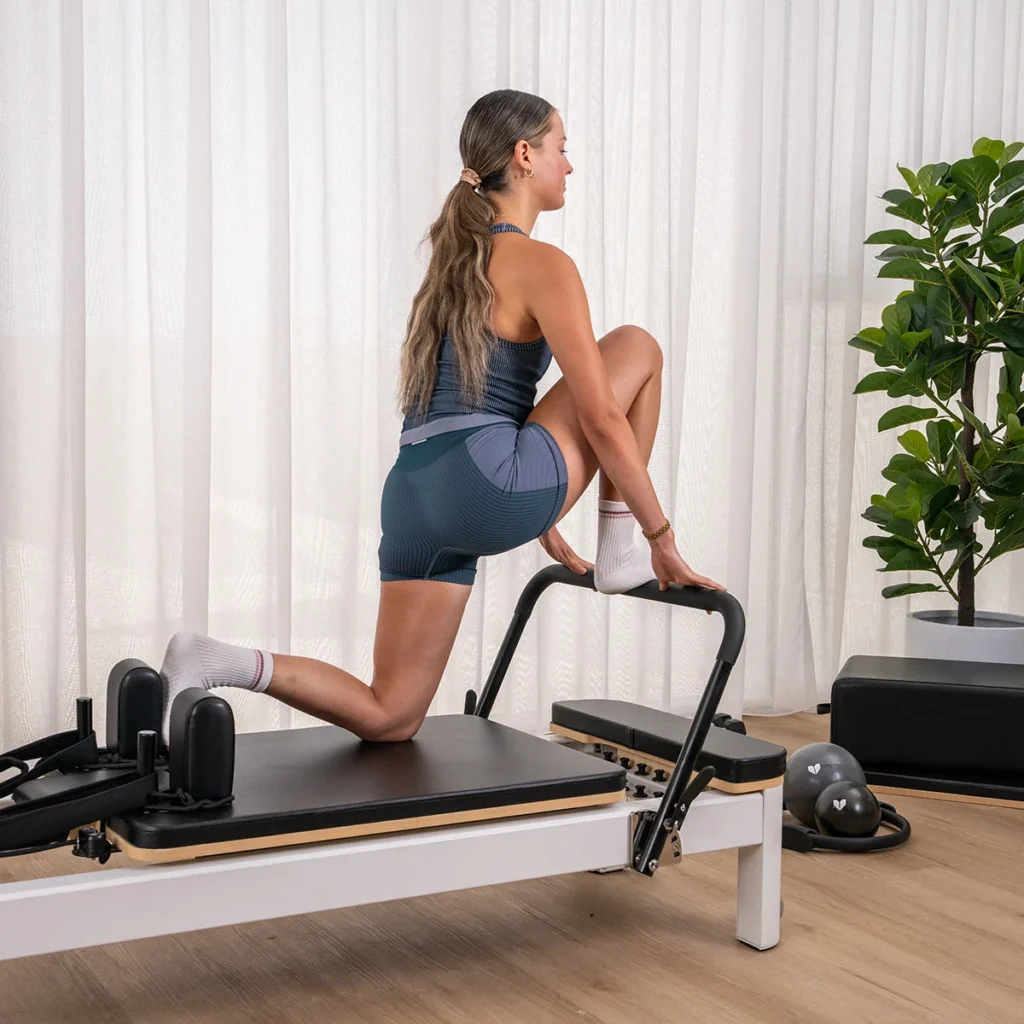
With the right measuring and a realistic layout, Pilates machine space at home is often easier to achieve than they expect.
FAQs (Frequently Asked Questions)
What counts as a “Pilates machine” in a home setup?
In a home setup, a “Pilates machine” typically refers to a Pilates reformer, but can also include foldable reformers, Pilates chairs, or wall units. Space needs vary significantly between these types, with reformers being the most common and often misunderstood in terms of space requirements.
How much floor space does a full-size Pilates reformer require at home?
A standard home Pilates reformer generally requires about 2.5 meters in length by 1 meter in width for its footprint. However, for comfortable and safe use, you should plan additional clearance around the machine—especially at the front, back, and one side—to allow easy access on and off the reformer.
How much clearance is needed around a Pilates reformer for comfortable use?
To use a Pilates reformer comfortably at home, it’s recommended to add approximately 50–60 centimeters of clearance around key access points. Many find that a total working area of roughly 3 meters by 1.5–2 meters provides enough room to kneel, stand, and adjust springs without bumping into walls or furniture.
Does ceiling height affect the placement of a Pilates machine at home?
Ceiling height usually isn’t an issue for using a reformer alone. However, if you add vertical attachments like towers or half trapezes that require overhead arm work or standing exercises, ceiling height becomes important. In many Australian homes with 2.4-meter ceilings, this is typically sufficient but always check product specifications.
Can I fit a Pilates machine in a living room or apartment?
Yes, fitting a Pilates machine like a reformer in an open-layout living room or apartment is possible if access areas are kept clear. Constraints often include narrow walkways, sliding doors, or furniture blocking carriage ends. Committing to a dedicated ‘reformer zone’ rather than moving the machine each session helps maintain functional Pilates machine space at home.
How should I measure my space correctly before buying a Pilates reformer?
Measure your room’s length and width first, then subtract unusable areas such as door swings and built-ins. Compare these measurements against the exact dimensions of your chosen reformer model—not just typical estimates. For accuracy, tape out the footprint plus clearance on your floor and simulate movements like stepping on and lying down to ensure enough space.
<script type="application/ld+json">
{
  "@context": "https://schema.org",
  "@type": "BlogPosting",
  "mainEntityOfPage": {
    "@type": "WebPage",
    "@id": "https://scshelter.org/how-much-space-does-a-pilates-machine-actually-need-at-home/"
  },
  "headline": "How Much Space Does a Pilates Machine Actually Need at Home?",
  "image": [
    "https://scshelter.org/wp-content/uploads/2026/08/7_1fc59860-60a0-4da4-8002-e0d7eb94ead4_1800x1800.webp",
    "https://scshelter.org/wp-content/uploads/2026/08/LFRF-CONTSTU_media-10_2133e690-fca9-40f3-bcb6-af8f3b328d57.webp",
    "https://scshelter.org/wp-content/uploads/2026/08/PR-MN-014-GRY-1.webp"
  ],
  "author": {
    "@type": "",
    "name": "john Klassen",
    "url": "https://scshelter.org/author/admin/"
  },
  "publisher": {
    "@type": "Organization",
    "name": "SC Shelters",
    "logo": {
      "@type": "ImageObject",
      "url": "https://scshelter.org/wp-content/uploads/2024/11/ADC_City_contractors__27_-removebg-preview-e1732721415626-1.png"
    }
  },
  "datePublished": ""
}
</script>